

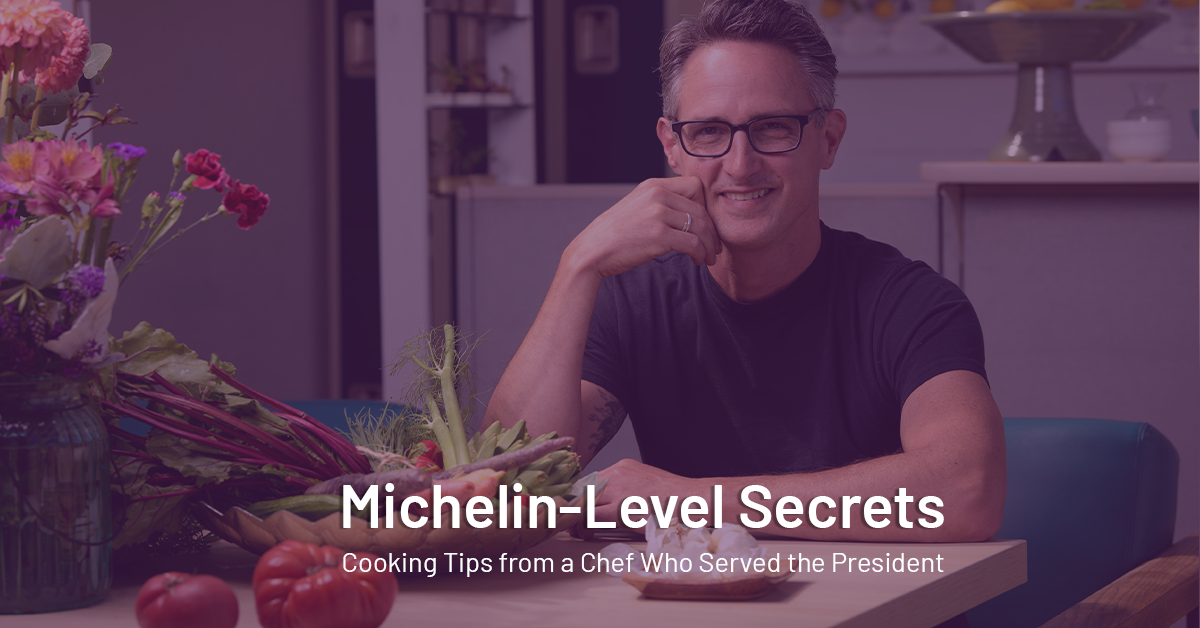
Have you ever watched a Michelin-starred dish land on the table and wondered, “How did they do that?” It’s not just about the garnish or plating, it’s about instinct, technique, and small choices that make a massive difference. I’ve had the privilege to train and work in some of the world’s finest kitchens, including the Palace Hôtel Bristol Paris, where I cooked for Pope John Paul II and Tonino Lamborghini. These weren’t just meals, they were experiences crafted with precision and purpose.
Since launching Capitola Garden Feast in 2017, I’ve brought this level of care to private homes and gardens throughout California. My mission is simple: to elevate your at-home dining with the same standards I upheld for presidents and royalty.
If you’re curious about Private Chef Cooking Secrets, these insights will help you think (and cook) like a chef who’s been in the heat of world-class kitchens.
1. Ingredients: Respect Over Everything
It might sound basic, but choosing your ingredients is your first act of craftsmanship. Too many people grab what’s on sale or what’s available. That’s fine, but to cook like a pro, you need to treat ingredients like a sommelier treats wine.
I always recommend shopping small and seasonal. Farmers’ markets, specialty butchers, and local fishmongers will give you fresher and more flavorful options than mass-market groceries. Use your senses, smell the herbs, touch the produce, and talk to the people who grow or source them. The story behind the ingredient matters.
Even simple dishes come alive when you start with produce that’s at its peak. Think of this as the baseline of all Michelin star cooking tips, respect what nature gives you, and don’t overpower it.
2. Mise en Place: The Secret Sauce of Efficiency
Before a single flame is lit in a Michelin kitchen, everything is in its place. “Mise en place” means more than having your ingredients prepped, it’s a mindset. It keeps your space clean, your timing sharp, and your dishes consistent.
At home, this translates into chopping, measuring, and organizing all your ingredients before you start cooking. You’ll notice how stress-free your process becomes, and how much smoother the final presentation looks.
Think of it as building your rhythm. And cooking, at its best, is a rhythm.
3. Heat Mastery: Understand Fire Like a Chef
If you want to know how to cook like a Michelin-star chef, mastering heat is non-negotiable. Most home cooks either underheat or overheat. They don’t let the pan fully preheat or they crank the heat too high too fast. Both approaches ruin flavor and texture.
I always advise home chefs to learn the stages of heat. For example:
- Oil shimmering = ready for sauté
- Butter foaming = perfect for searing
- Gentle bubbling = ideal for poaching
Control your flame, and your food will start responding with texture and color like you’ve never seen.
4. Knife Skills: Precision Is Power
Uniform cuts don’t just look good, they cook evenly. That’s why knife skills are one of the first things taught in culinary school. In my years working in high-pressure hotel kitchens, I learned to rely on the rhythm of my knife. There’s a flow to it, and with practice, it becomes second nature.
You don’t need a drawer full of fancy blades. Just invest in one solid chef’s knife and learn how to handle it properly. Practice your julienne, dice, and chiffonade cuts. Your food will cook more consistently, and you’ll develop an intuitive sense of timing and portioning.
5. Sauce Work: Build Flavors in Layers
Some of the best tips from chefs who cooked for presidents involve sauces. At Hôtel Bristol, sauces were never an afterthought. They were foundational, built over hours with stock reductions, deglazing, infusions, and emulsifications.
At home, you can adapt this by learning how to deglaze a pan properly, using wine or broth to lift flavor off the bottom. Finish with a knob of butter or a splash of cream. Herbs and aromatics added after the heat goes off will bloom with natural oils.
These finishing touches take dishes from good to memorable.
6. Season with Patience
This is where even experienced home cooks fall short. The season once, maybe with salt and pepper, and stop there. A seasoned chef builds flavor throughout the process.
Here’s what I do:
- Salt vegetables while they sweat.
- Add herbs and spices midway to enhance the aroma.
- Always finish with a final taste and adjustment before serving.
Think of seasoning as writing a paragraph. Every line (or step in cooking) builds toward your final message. Let your dish speak clearly.
7. Plating: Balance and Intention
You don’t need tweezers or edible flowers to plate like a Michelin chef. But you do need purpose. I ask myself: Does this plate tell a story? Are the colors contrasting? Does it have height, structure, and flow?
I usually plate in odd numbers, three scallops instead of four. It looks more natural. Use negative space on the plate like a painter uses canvas. Let the eye wander and land. Let the dish breathe.
At Capitola Garden Feast, I bring this philosophy to every garden table we set, each plate has intention, even in the most relaxed outdoor settings.
8. Clean as You Go (Seriously)
It sounds simple, but cleaning while cooking sharpens your focus. It clears space, physically and mentally, for creativity. You can spot mistakes faster and recover more easily.
Even in Michelin kitchens, the best chefs aren’t the fastest, they’re the cleanest. A tidy station reflects a tidy mind.
9. Practice Restraint: Don’t Do Too Much
One of the hardest lessons I learned early on was when not to add something. Sometimes, the difference between a stunning dish and a confused one is one extra component.
Stick to three or four primary elements. Let them shine. Avoid crowding the plate with sauces, garnishes, or unnecessary ingredients. Simplicity, executed well, always wins.
10. Make It Personal
At the end of the day, cooking isn’t about perfection. It’s about presence. I carry every lesson from the hotel kitchens with me, but I never forget who I’m cooking for. It’s not the Pope or a president anymore, it’s families, couples, and groups of friends gathered for a beautiful moment together.
That’s why I created Capitola Garden Feast, to bring Michelin-level technique to people who care more about connection than white tablecloths. And if you can do that in your own kitchen? You’re already cooking like a pro.
FAQs
- How can I make my home-cooked meals feel more Michelin-level?
Focus on heat control, ingredient quality, and presentation. Keep your flavors clean and your plating intentional.
- What’s the biggest difference between home cooks and Michelin chefs?
Attention to detail. From mise en place to seasoning adjustments, chefs think ten steps ahead.
- Can I really learn these techniques without formal training?
Absolutely. It takes patience and repetition, but the principles of Michelin-level cooking are universal.
- What’s your go-to dish when cooking for VIP guests at Capitola Garden Feast?
It depends on the season, but I love showcasing California’s local seafood with bold, clean sauces and just-picked herbs.
- How do I book Capitola Garden Feast for a private chef experience?
You can contact us through our website. Booking 2–3 weeks in advance helps us curate a fully personalized menu just for you.
Cook with Confidence, Plate with Purpose
Michelin-star cooking isn’t a mystery, it’s a discipline. It’s about listening to your food, honoring your process, and showing up with care. You don’t need a brigade of sous chefs to elevate your meals. You just need knowledge, rhythm, and intention.
Whether you’re cooking for two or twenty, I hope these insights help you unlock a new level of joy in your kitchen. And if you ever want to experience what it’s like to have a chef cook for you, with all the elegance of a fine hotel and the intimacy of your own home, that’s exactly what we offer at Capitola Garden Feast.
Experience the craft. Taste the difference. Let Capitola Garden Feast turn your next meal into something unforgettable.