

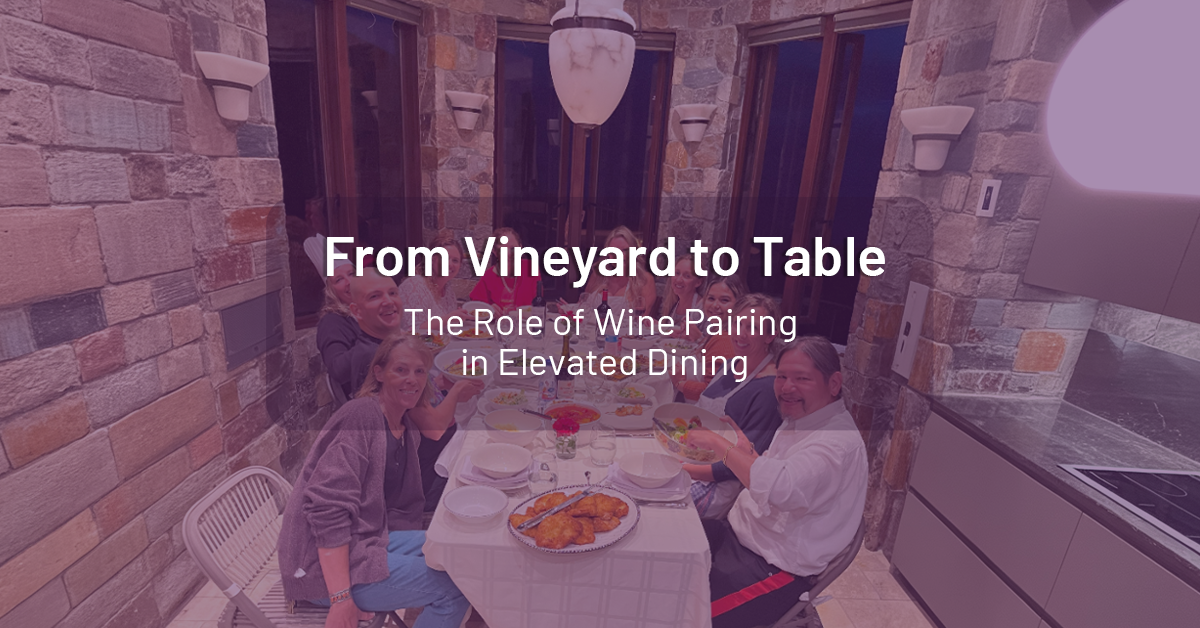
“Wine should not merely accompany a dish, it should complete it. When the match is right, neither needs to speak louder. They listen to each other.”
Table of Contents
- A Personal Note on Wine and Memory
- Beyond the Glass: What Makes Pairing Matter
- My Approach to Building Flavor Bridges
- Pairing as Presence, Not Performance
- Working With Local Vineyards: Why It Matters
- Your Invitation
- FAQs
A Personal Note on Wine and Memory
Every meaningful meal I’ve ever cooked had a story, and that story didn’t start on the plate. It started in the soil, the cellar, the sunlight over a quiet vineyard in late summer. Wine, to me, is memory in liquid form. At Capitola Garden Feast, where I create curated private dining experiences, I don’t treat wine as a side note. It’s a co-creator.
Some nights, it’s a bold Syrah that teases the spice in a grilled quail. Other times, it’s a minerally Albariño that carries a citrus-marinated scallop across the tongue like a wave. This isn’t about being fancy. It’s about being intentional.
Beyond the Glass: What Makes Pairing Matter
Wine pairing isn’t about rules. It’s about resonance. A good Wine Pairing Guide shouldn’t intimidate; it should spark curiosity.
Do you need to know every region in Burgundy to enjoy a Pinot Noir with duck confit? Not at all. You just need to know what feels right.
Here’s how I think about it:
- Acidity cuts through richness (imagine Sauvignon Blanc with burrata).
- Tannins tame fat (Cabernet loves ribeye for this reason).
- Sweetness balances heat (a chilled Riesling with Thai-style shrimp? Magic).
- Each pairing becomes a quiet dialogue. Wine doesn’t lead or follow, it dances.
My Approach to Building Flavor Bridges
As a private chef, every dinner I prepare is designed around mood, moment, and memory. Before I even step into the kitchen, I ask: What emotion do I want this course to evoke?
Wine becomes part of that narrative. I don’t just pour wine to match a protein. I build flavor bridges, connections between herbaceous notes in the wine and foraged greens, between oak-aged vanilla tones and caramelized shallots.
Sometimes, the unexpected works best:
- A pét-nat with a wild mushroom tart.
- A chilled red with seared duck and blueberry jus.
- Pairings like these create friction in a good way. They make people pause, smile, and remember.
Pairing as Presence, Not Performance
One thing I’ve learned cooking in grand hotels and intimate backyards alike is that what guests remember most is how they felt.
At Capitola Garden Feast, a proper Culinary Wine Experience means the wine does more than “match.” It encourages guests to slow down, notice flavors, ask questions, and stay present.
It’s not about prestige labels or perfect pairings. It’s about harmony, humility, and surprise.
Working With Local Vineyards: Why It Matters
We’re blessed to live and cook in a region where the land speaks clearly through its wine. I’ve built relationships with small vineyards on the Central Coast that focus on organic, biodynamic, and low-intervention methods.
These wines have character. They change with the seasons. They speak of foggy mornings, sandstone soils, and quiet, disciplined craftsmanship.
When I bring them to your table, I’m not just bringing a bottle, I’m bringing a piece of the land that raised it.
Your Invitation
Pairing wine and food is about connection. Between chef and guest. Grape and ground. Story and sensation. Whether you’re planning a garden dinner with close friends or celebrating something deeply personal, I invite you to explore what thoughtful wine pairing can add to the evening.
You don’t need a sommelier. You need someone who listens to your tastes, your energy, your story.
FAQs
What is the purpose of wine pairing in private dining?
Wine pairing enhances the flavors in both the dish and the wine. In a private setting, it also elevates the pace and feel of the meal, adding layers to the experience.
Do you provide a wine list or bring wines yourself?
For most private chef dinners, I offer full pairing services, curating, sourcing, and serving wines that align with the custom menu.
Can we use wines from our own cellar?
Absolutely. I’m happy to work with wines you love and build the menu around them. That, too, is part of a personalized Culinary Wine Experience.
What if we don’t drink alcohol?
Non-alcoholic pairing is an art of its own. I create beautiful alternatives using botanicals, teas, and craft elixirs that follow the same principles of acidity, sweetness, and aroma.
How do I learn more about wine pairing?
You don’t need formal training. And if you’re curious, I’m always happy to explain pairings as we go.
Let’s create something unforgettable. Right there at your table.